
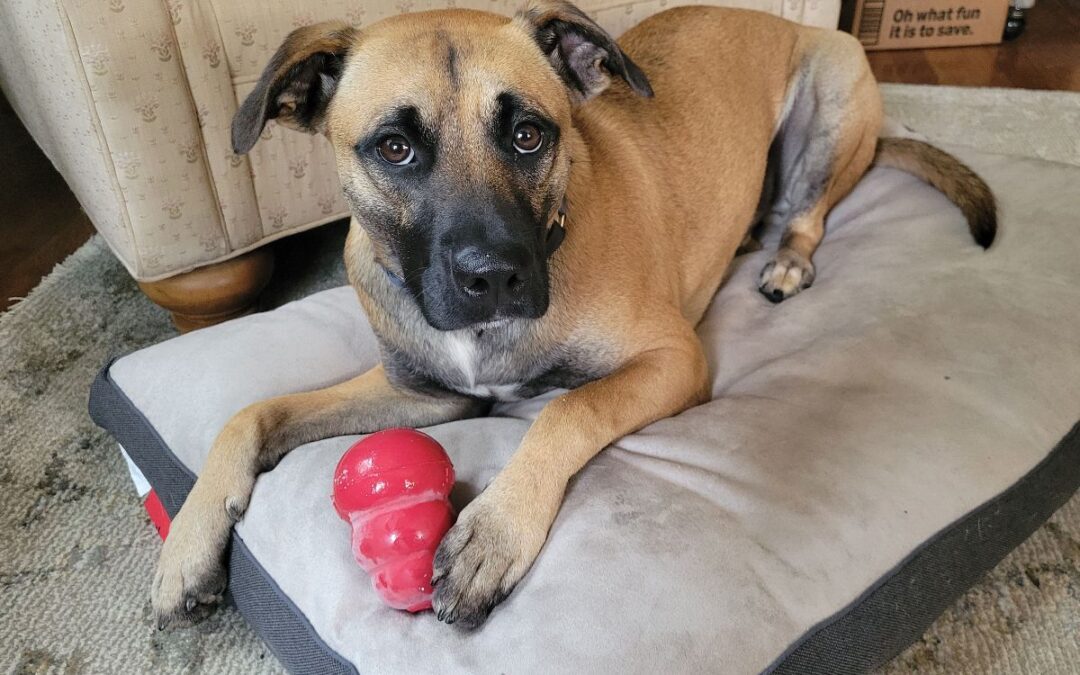
I often share stories about my dog, Lenny. While I’d like to say I’m teaching him lots of new tricks, the truth is, I’m learning even more from him.
One of my friends calls these updates “Life and Leadership Lessons with Lenny.”
At almost 2 years old, he still has endless puppy energy. If I don’t pay attention, that energy goes into things I wish it didn’t: like digging holes in the middle of my yard (earning him the nickname “My little digger shmigger”) or pulling plants from flowerpots, holding the stems in his mouth, and waving them like flags in his own parade.
My job is to play part-time energy alchemist. How do I help him use his energy for good? Or at least not destroy what’s around him?
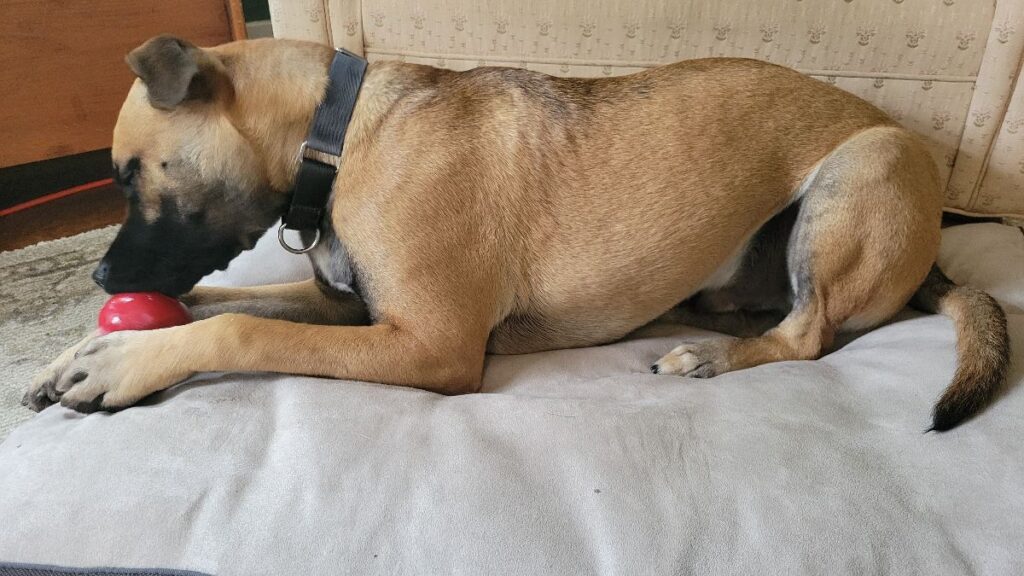
Enter Kong toys.
If you have a dog, you probably know these: hard, red rubber toys with hollow interiors, perfect for stuffing treats. Lenny’s favorites are rice, chicken, and green beans, or rice, peanut butter, and yogurt. I freeze them to create long-lasting puppy popsicles meant to keep him busy for an hour or more.
And they do… or at least, they used to.
But Lenny’s smart. It only took him a few sessions with the frozen Kong to figure out it melts just as fast whether he licks it constantly or leaves it alone. So why not be patient?
He trots off to do something else, like alert me to every passing stranger on the street, and comes back later to finish off his melted treat in minutes.
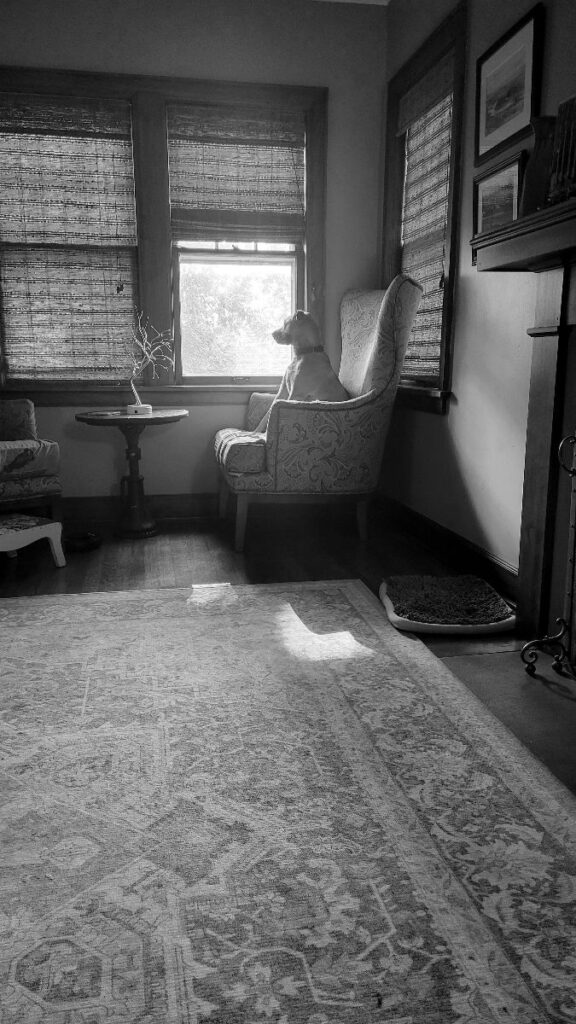
Lenny has learned the value of patience. He’s realized something most people don’t figure out until much later in life: work smarter, not harder.
I admire how easily he walks away from the Kong. He doesn’t wonder if it will melt. He rarely checks on it. He knows how long it takes. He trusts the process and shifts his attention to something more interesting until his treat is ready.
And every time I watch him do it, I think about leadership.
How often do we do the opposite? We worry about an outcome we can’t control. We check on something that isn’t ready yet. We spend time and energy trying to force a situation, solve a problem, or hurry a process along, even when a little patience might serve us better.
In executive coaching and leadership development, we often talk about where leaders are focusing their time and energy. Because being an effective leader isn’t just about getting more done. It’s also knowing when to act, when to wait, and where your attention is most valuable.
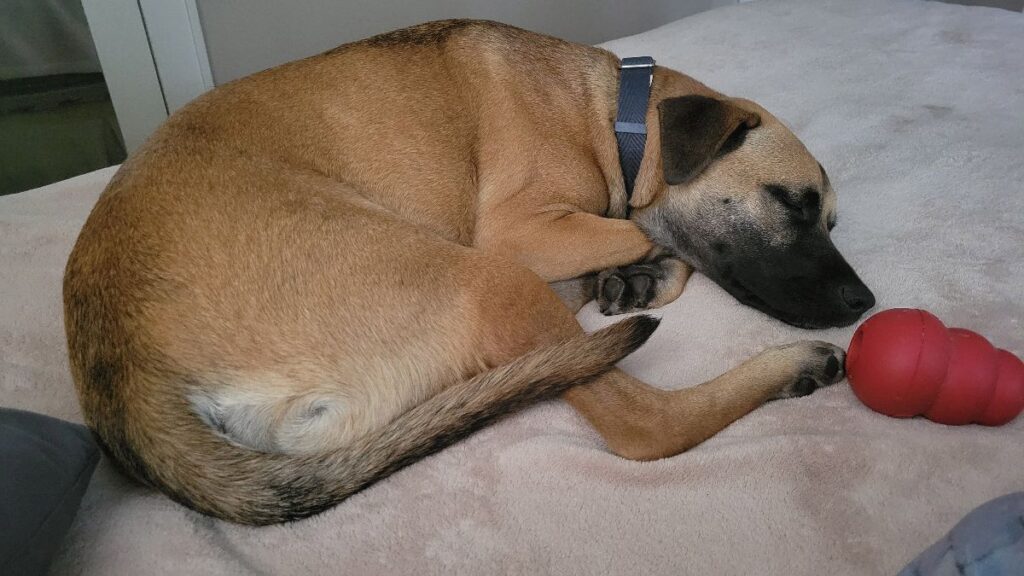
Lenny has given me a pretty simple reminder. Sometimes the smartest thing you can do is walk away for a while. Each time he does it, I consider what I am spending too much time forcing or worrying about.
Most things seem to work themselves out with a bit of time. Rather than worrying about an outcome you can’t control, what if you shifted your attention towards something else while you waited? How might you use that time to do something fun, meaningful, or simply relaxing?
What if patience was more than just a virtue? What if it was also a gift?
Patience doesn’t mean doing nothing. Sometimes it means recognizing that you’ve done what you can for now, and it’s okay to trust the process and put your energy somewhere else.
When you truly understand the value of patience, you find you have the time to do things that truly matter and let the rest go.