
For those of you who follow me, you know that fall means football. I love watching all the different roles, skills, and strategies that come together to create a winning team. It reminds me of conversations I have with my clients about team development and team performance. Some teams function like well-oiled machines while others struggle to move the ball down the field.
Think of 5-year-olds playing sports. You have soccer “teams” that are a mass of kids running after a ball, each trying their best to kick it. They look like an amoeba of fun with no true direction, which is partly why it’s so endearing.

Or think of T-ball games. Usually, the only kid engaged is the one up to bat. The rest of the kids are in their own little worlds – picking up rocks, staring off into space, or wrestling with each other.
When you look at businesses from a wider perspective, the teams that lack clarity and direction sometimes look like this.
Again, this is fine for kids’ teams just learning about sports and teamwork. But it’s not as endearing when you’re trying to run a business.
So how can using a few tricks from watching football help you build better teams?

Know your Position
In the business world, this translates to job roles, responsibilities, job descriptions, and expectations. Every player on a football team knows what position they play and what’s expected of them.
The Center is responsible for snapping the ball to the Quarterback and then immediately protecting him from the opposing defense.
The Quarterback communicates to the rest of the team what play they’re going to run, tells the Center when to snap the ball, and then either hands it off or passes it to another player.
Are there more details to successfully do these jobs?
Absolutely. But at a very basic level, this is how they function in their roles and interact with each other.
Does everyone on your team understand their role and how they contribute to the team?

Have a Playbook
If you watch any football documentary, teams diagram out what each player should do once the ball is snapped. Each play is designed to either move the ball down the field or prevent the other team from doing so. Put all these plays together and you have a Playbook.
In the business world, the playbook contains your policies, procedures, and processes – the systems that help teams know how work gets done.
I often hear business leaders say it feels “too corporate” to document procedures. They tell me everyone should just do their jobs.
And my question? How do they know what to do if you don’t diagram it out for them?
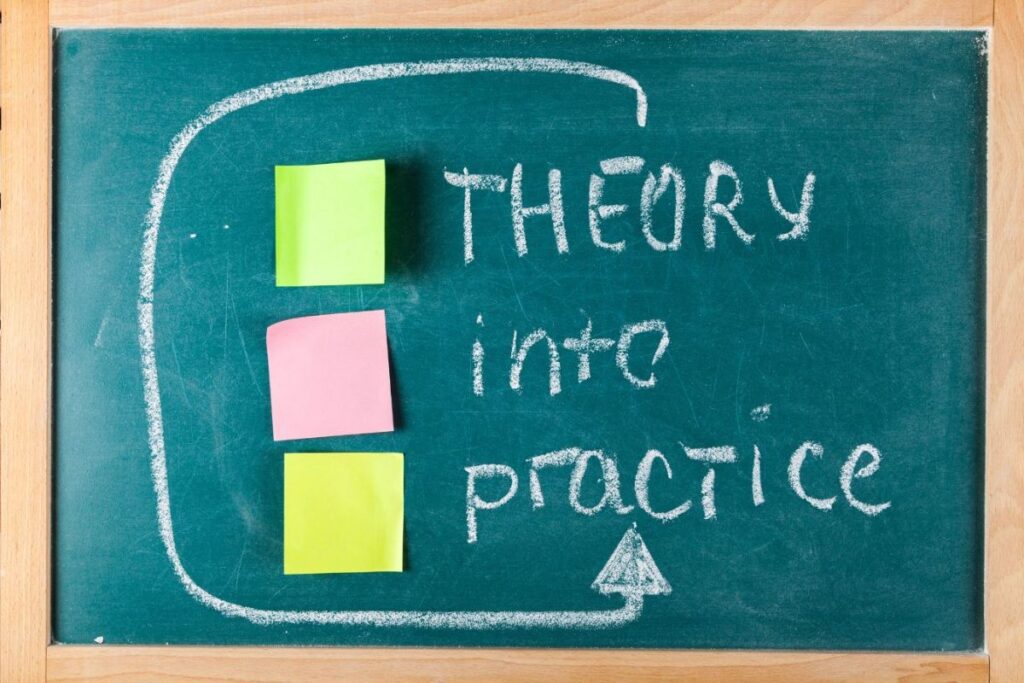
Practice
Players practice all week to be on the playing field for 60 minutes.
They walk through new plays slowly until each person understands what to do. Then they practice each play in real time – getting better as a team. Practice creates muscle memory. Players automatically run a play because their bodies know exactly where they need to be.
In business, this is called role-playing.
If the thought of role-playing makes you cringe, you’re not alone. Everyone objects to this idea. It’s strange and awkward because we don’t do it. But athletes do it all week long because it makes them better.
If you’re frustrated that your team isn’t doing a great job of executing plays, maybe you need to create some muscle memory by practicing a bit more.
Watch some football during the next few weeks. Think about what it takes to flawlessly execute a well-designed play. How might your team benefit from these ideas?
How might your business benefit from everyone on your team knowing exactly what to do?